Breaking News: Trump Secures Agreement with China for Unrestricted Flow of Rare Earth Minerals to the U.S.
Summary
The agreement secured by former U.S. President Donald Trump with China to ensure the unrestricted flow of rare earth minerals to the United States represents a significant development in the geopolitics of critical mineral supply chains. Rare earth elements (REEs)—a group of 17 metals essential for defense, technology, clean energy, and manufacturing—are predominantly controlled by China, which supplied approximately 70% of U.S. rare earth imports between 2020 and 2023 and dominates about 90% of global processing capacity. This heavy reliance has long posed national security and economic risks for the United States, prompting intense negotiations amid escalating trade tensions and concerns over supply chain vulnerabilities.
The agreement emerged against a backdrop of complex U.S.-China relations, marked by reciprocal tariffs, export controls, and diplomatic friction over critical minerals. China’s export restrictions on rare earths have historically been used as leverage in trade disputes, exemplified by the 2010 embargo against Japan. The Trump administration adopted a security-driven, transactional approach to these minerals, pursuing both domestic mining initiatives and diversified international partnerships to reduce dependence on Chinese sources. The Geneva trade truce between the two countries aimed to ease tensions by facilitating freer export flows, though China’s delayed compliance and ongoing disputes over enforcement have complicated implementation.
Economically, the deal temporarily alleviates supply bottlenecks and price volatility that had disrupted industries reliant on rare earths, including aerospace, automotive manufacturing, and electronics. However, the continued dominance of Chinese processing infrastructure and the slow pace of expanding alternative supply chains underscore enduring vulnerabilities. The United States, alongside allies such as Australia, Japan, and Brazil, is investing in mining, processing, and research to establish more resilient and diversified sources, but these efforts are projected to take a decade or more to fully mature.
The agreement reflects the strategic importance of rare earth minerals in the broader U.S.-China rivalry, intertwining trade policy, national security, and global supply chain dynamics. While it marks progress toward stabilizing critical mineral flows, persistent tensions—such as disputes over export controls, retaliatory measures, and mutual accusations—highlight the fragility of this cooperation. The deal thus represents a pragmatic yet cautious step in an ongoing and complex contest for control over essential resources vital to modern technology and defense.
Background
The United States has long been heavily reliant on China for the supply of rare earth minerals, a critical group of 17 elements essential for defense, electric vehicles, energy, and electronics industries. Between 2020 and 2023, approximately 70% of U.S. imports of rare earth compounds and metals originated from China, underscoring the country’s dominant position in the market. China’s dominance extends beyond mining, controlling around 90% of the world’s chemical processing and refining capacity for these minerals, which has raised concerns about the U.S.’s vulnerability in supply chains.
Historically, China has leveraged its near-monopoly on rare earth elements as a strategic tool in international trade disputes. A notable example occurred in 2010 when China restricted rare earth exports to Japan during a territorial dispute, triggering global price spikes and signaling the potential for resource weaponization. This pattern continued amid escalating trade tensions with the United States, with China imposing export controls and tariffs in response to U.S. tariffs, causing anxiety among American manufacturers who depend on these materials for production.
Rare earth minerals are indispensable in a broad range of technologies, including electronic warfare systems, aerospace components, and automotive manufacturing. The U.S. military’s consumption, while a small fraction of global demand, is projected to increase significantly, further emphasizing the strategic importance of securing a stable supply chain. However, domestic production in the United States remains nascent, with only one rare earth mine operating and limited processing capabilities, creating reliance on imports and exposing the U.S. to supply disruptions.
Efforts to diversify supply sources and build alternative partnerships are underway, involving countries such as Australia, Brazil, South Africa, Saudi Arabia, Japan, and Vietnam, which are investing in mining, processing, and research initiatives. Nonetheless, the technological complexity of refining rare earth elements often results in minerals mined elsewhere being sent to Chinese-owned processing plants, perpetuating dependency on China.
The situation has prompted significant political and economic responses in the U.S., including promises from the Trump administration to invoke wartime powers to accelerate domestic mining and reduce dependence on Chinese supply chains. The tense negotiations over rare earth mineral exports and tariffs have formed a critical backdrop to the recent agreement reached in Geneva, aiming to secure an unrestricted flow of these essential materials to the United States.
Context of the Agreement
The agreement between the United States and China to ensure the unrestricted flow of rare earth minerals to the U.S. occurs against a backdrop of significant geopolitical and economic tensions surrounding critical mineral supply chains. Rare earth elements (REEs) are vital for numerous industries, including defense, technology, and manufacturing, making them a focal point of strategic competition, particularly between the U.S. and China.
The U.S. has long recognized its vulnerability due to heavy reliance on China, which supplies approximately 70% of rare earth compounds and metals imported by the United States between 2020 and 2023. In response, the Trump administration took a more transactional and security-focused approach to minerals diplomacy, aiming to reduce dependency on Chinese sources and bolster domestic and allied supply chains. This included imposing tariffs and investigating national security risks related to imports of processed critical minerals under Section 232, alongside executive orders to develop alternative supply lines outside China.
China’s response to these U.S. measures has involved imposing a complex system of export restrictions on rare earths, tungsten, and molybdenum, including export duties, quotas, and limitations on exporters. These controls have significantly disrupted global supply chains, affecting industries ranging from automotive manufacturing to aerospace and defense, with companies in Germany and India warning of production delays and economic impacts due to restricted access to critical minerals.
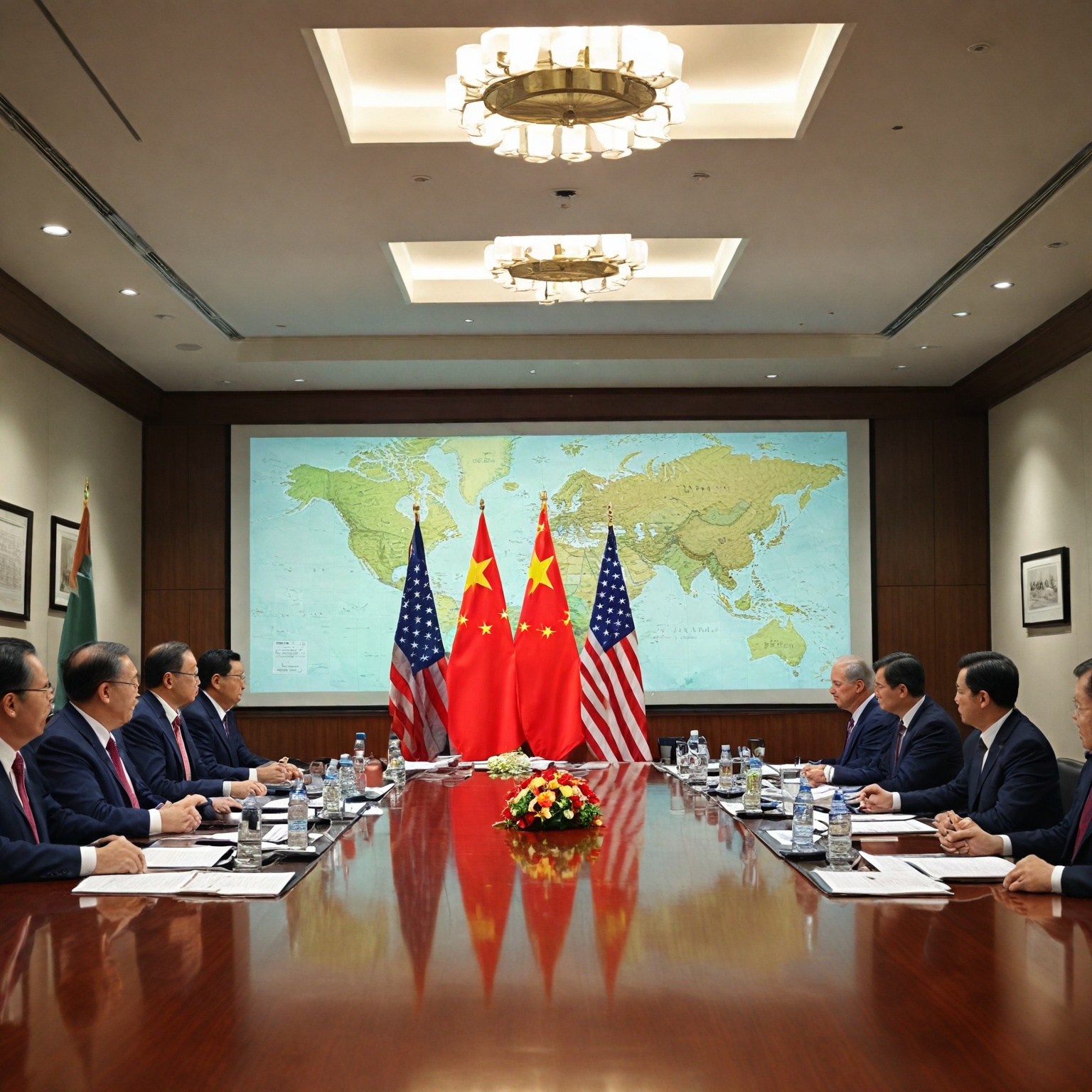
Amid these tensions, the bilateral agreement represents an attempt to de-escalate trade restrictions following a truce in Geneva, with the U.S. closely monitoring China’s compliance and engaging in ongoing diplomatic correspondence. However, the broader strategic context includes challenges such as limited viable domestic mineral reserves, security risks affecting exploration investments—particularly in regions like Ukraine—and the need for substantial government backing to foster alternative supply chains. Furthermore, global efforts in countries such as Australia, Brazil, South Africa, Saudi Arabia, Japan, and Vietnam to enhance rare earth mining and processing highlight the international dimension of securing supply chain resilience.
The agreement thus reflects a complex interplay of trade, national security concerns, and the urgent need to stabilize critical mineral supplies amid escalating geopolitical competition between the U.S. and China.
Negotiation Process
The negotiation process between the United States and China over the unrestricted flow of rare earth minerals has been complex and marked by significant tensions. Initial talks in Geneva signaled a willingness from both sides to engage, but substantive disagreements persisted, particularly regarding China’s export restrictions on rare earths and critical minerals. Chinese officials involved in the Geneva discussions expressed a readiness to continue dialogue; however, concrete actions such as the approval for rare earth exports remained stalled, reflecting a lack of urgency on Beijing’s part.
China’s export controls include a combination of duties, quotas, and limitations on the enterprises permitted to export rare earths, tungsten, and molybdenum. These measures have been justified by Beijing as necessary for conserving exhaustible natural resources and reducing environmental pollution from mining activities. However, the United States and other stakeholders have criticized these restrictions for preferentially benefiting Chinese manufacturers by encouraging domestic extraction and limiting foreign access.
Tensions escalated when the U.S. Commerce Department issued guidance warning that the use or sale of Ascend AI chips made by Huawei could violate export controls, a move China condemned as contrary to the spirit of the trade agreement. In response, China accused the U.S. of unilaterally provoking new economic and trade tensions by imposing export controls and revoking visas for Chinese students. This atmosphere of mutual recrimination complicated efforts to find common ground.
The Trump administration approached the negotiations with a transactional foreign policy perspective, viewing critical minerals as a strategic asset essential for national security and economic stability. This stance was exemplified by initiatives to secure mineral resources from allies such as Ukraine, with proposals that initially linked mineral resource use to repayment for prior military aid. Moreover, the United States actively pursued partnerships with other countries including Japan, Australia, Brazil, South Africa, Saudi Arabia, and Vietnam to diversify supply chains and reduce dependence on China.
Throughout the process, U.S. agencies including the National Security Council, Commerce Department, and the Office of the Trade Representative played key roles in managing the diplomatic and economic strategies underpinning the negotiations. The administration closely monitored China’s compliance with the Geneva trade agreement, maintaining ongoing correspondence with Chinese officials to address emerging issues and hold China accountable for its commitments.
Terms and Conditions of the Arrangement
The bilateral agreement between the United States and China concerning the flow of rare earth minerals establishes a framework aimed at ensuring a more reliable and unrestricted supply of these critical materials to the U.S. market. While the full details of the arrangement remain under negotiation, the agreement marks a significant shift in cooperation on strategic resources, reflecting a mutual interest in stabilizing supply chains critical to various industries and national security.
A key element of the arrangement involves China easing export restrictions on rare earth elements and their derivatives, which had previously been tightened amid escalating trade tensions. The United States had anticipated that following the Geneva talks, China would lift or reduce these controls to facilitate smoother trade. However, despite ongoing dialogue, export approvals have largely remained blocked, with Chinese actions demonstrating limited urgency in implementation. U.S. officials continue to monitor China’s compliance closely and maintain active communication channels to address outstanding issues.
The agreement also implicitly acknowledges the broader geopolitical and economic context, where the U.S. seeks to reduce its heavy reliance on China— which supplies approximately 70% of U.S. imports of rare earth compounds and metals—through diversified partnerships and domestic initiatives. This includes efforts to foster alternative supply chains via cooperation with other countries such as Australia, Brazil, and Japan, and support for increased research and development in rare earth element (REE) processing technologies. The U.S. strategy emphasizes a long-term, sustainable approach rather than short-term fixes, recognizing that building robust, China-independent supply chains may take a decade or more.
Notably, this agreement contrasts with previous U.S.-Ukraine mineral deals, which were more financially and politically complex and faced significant challenges regarding resource viability and infrastructure security. In contrast, the U.S.-China deal focuses primarily on trade facilitation and export policy adjustments without demanding repayment conditions or linking resource development to military aid.
While the agreement represents progress, challenges remain. The geopolitical rivalry and ongoing trade tensions between the two nations continue to complicate full implementation. Moreover, export restrictions on critical minerals, including rare earth alloys and magnets, have already caused production delays and raised concerns among industries such as automotive and aerospace worldwide. Thus, the arrangement’s terms reflect a balance between diplomatic negotiation, economic interests, and strategic security considerations amid a complex and evolving global supply chain environment.
Legal and Policy Framework
The legal and policy framework underpinning the United States’ approach to securing a stable supply of rare earth minerals from China is multifaceted, involving both trade measures and national security considerations. The Trump administration, in response to China’s export restrictions on rare earth elements, emphasized the need for a sustainable, long-term structural solution rather than temporary fixes. This approach involved coordination across multiple government bodies, including the National Security Council, National Economic Council, Council of Economic Advisers, Commerce Department, Energy Department, and the Office of the Trade Representative.
Following China’s 2010 rare earth elements embargo, the United States, alongside the European Union and Japan, filed a complaint with the World Trade Organization (WTO), which successfully pressured China to remove export quotas by 2015. This legal precedent reinforced the importance of international trade law in addressing supply vulnerabilities. Additionally, the United States took domestic action by revitalizing rare earth mineral processing facilities, such as reopening the Mountain Pass Rare Earth Mine in California, and in 2023, intensified efforts through increased Department of Defense and Department of Energy budgets aimed at bolstering domestic mining and refining capabilities. Strengthening supply chain partnerships with allies like Canada and Australia also became a strategic priority under the so-called “friendshoring” strategy.
In the context of the recent agreement between the U.S. and China, the administration has closely monitored China’s compliance with the Geneva trade agreement that aimed to ease export restrictions on rare earth minerals. Despite expectations that China would relax its controls following the truce, the United States continues to engage diplomatically and maintain oversight through official correspondence, emphasizing enforcement of the agreement’s terms.
National security considerations have also influenced policy instruments. Under Section 232 of the Trade Expansion Act, the Secretary of Commerce can report if imports of critical mineral articles threaten national security, allowing the President to impose tariffs that would supersede existing reciprocal tariffs. This legal mechanism has been invoked by the Trump administration to regulate imports, reflecting the administration’s commitment to protecting the domestic supply chain from foreign vulnerabilities.
Together, these legal and policy measures represent a comprehensive framework designed to reduce U.S. dependence on China for rare earth minerals by combining international trade law enforcement, domestic industry support, strategic alliances, and national security-based trade regulations.
The Geneva Trade Truce
In an effort to ease escalating tensions between the United States and China, both countries reached a fragile trade truce in Geneva earlier in the year, aiming to address key issues including export restrictions on rare earth minerals. Rare earth elements, a group of 17 critical metals essential for national security, economic resilience, and industrial applications, are heavily controlled by China, which supplies approximately 70% of the U.S. imports in this sector between 2020 and 2023. The Geneva agreement was expected to result in China relaxing its export controls on these minerals, thereby ensuring a more stable supply chain for the United States.
Despite the initial optimism, the truce has faced significant challenges. China’s delay in easing rare earth mineral exports has been viewed by U.S. officials as a breach of the agreement, prompting concerns over Beijing’s commitment to the 90-day tariff truce negotiated during the talks. U.S. authorities have responded by implementing new technology export controls and revoking certain student visas, signaling the fragile state of the agreement. The ongoing disputes underscore the complexity of negotiations, with both sides continuing to take actions perceived as undermining the broader goals of the truce.
The strategic importance of rare earth minerals has been further emphasized by their role in geopolitical conflicts, such as the war in Ukraine, where the presence of significant reserves adds another layer of global demand and urgency. In response to China’s export restrictions, the U.S. government has intensified efforts to diversify its supply chains. This includes seeking trade agreements with other partners and exploring domestic production and processing capabilities for rare earths. Officials from multiple U.S. agencies, including the National Security Council and the Department of Energy, have been actively involved in crafting a long-term, sustainable solution to reduce reliance on Chinese supply chains rather than settling for short-term fixes.
Economic Implications
The rare earth minerals market is of critical strategic and economic importance, especially to the United States, which has historically depended heavily on China for these materials. China currently controls approximately 90 to 99 percent of global processing capacity for rare earth elements (REEs), particularly for seven medium and heavy REEs—samarium, gadolinium, terbium, dysprosium, lutetium, scandium, and yttrium—that are vital to defense, energy, and automotive industries. This near-monopoly enables China to exert substantial influence over global supply chains, raising significant concerns about the security and stability of U.S. access to these essential minerals.
The recent agreement secured by former President Trump for an unrestricted flow of rare earth minerals from China to the U.S. has immediate economic consequences. On one hand, it temporarily alleviates supply bottlenecks and reduces the risk of price volatility caused by export restrictions previously imposed by China in retaliation to U.S. tariffs. These restrictions had triggered a surge in investor interest and innovation aimed at diversifying supply chains and
Geopolitical and Strategic Impact
The control and supply of critical minerals, particularly rare earth elements (REEs), have become a central issue in the geopolitical rivalry between the United States and China. China dominates the global rare earth market, producing approximately 90% of the world’s supply, which has long given it significant leverage over industries critical to defense, technology, and clean energy in the U.S. and beyond. This dominance has raised national security concerns in the U.S., as reliance on Chinese sources for these essential materials could jeopardize economic resilience and military readiness.
The Trump administration recognized these risks early on, identifying overreliance on foreign critical minerals as a threat to national security and economic stability. Efforts to reduce dependence on China included imposing tariffs and export restrictions that prompted retaliatory measures from Beijing, such as further export controls on critical minerals and magnets. These actions heightened trade tensions and disrupted global supply chains for automakers, semiconductor manufacturers, and military contractors. The ongoing strategic competition has also complicated diplomatic relations, with accusations from both sides regarding violations of trade agreements and export control regimes.
In response to the concentration of mineral resources in adversarial countries such as China, Russia, and Iran, the U.S. has pursued diversified partnerships and alliances to secure alternative sources of rare earth elements. Notably, the United States, Japan, the European Union, and the United Kingdom have explored establishing a critical minerals “buyers’ club” to collectively reduce reliance on China, while initiatives like the Mineral Security Partnership have sought to develop mining projects in various regions. However, challenges persist in expanding supply chains, especially in conflict-affected areas like Ukraine, where infrastructure damage and security risks hinder investment viability despite promising mineral reserves.
Despite military demand for rare earths representing a small fraction of total global consumption—less than 0.1%—the strategic importance of these materials transcends volume, as they are integral to advanced defense systems and emerging technologies. The geopolitical implications of securing rare earth supplies have thus driven the U.S. to balance domestic investment, international diplomacy, and market interventions. The agreement secured under the Trump administration to ensure the unrestricted flow of rare earth minerals from China to the U.S. reflects a pragmatic step toward stabilizing supply chains amid ongoing strategic competition and complex global dynamics.
International Reactions and Implications
The agreement between the United States and China to ensure the unrestricted flow of rare earth minerals has elicited varied international reactions, reflecting the broader geopolitical and economic stakes involved. Several countries and regions have expressed cautious interest or concern regarding the deal, especially given China’s dominant position in the critical minerals supply chain.
The United States, the European Union, Japan, and the United Kingdom are actively exploring the formation of a critical minerals “buyers’ club” aimed at reducing dependence on China. This multilateral initiative is designed to foster cooperation among like-minded partners and diversify supply sources, with the Mineral Security Partnership—comprising 13 members and potentially expanding to include Latin American and Southeast Asian countries—planning 15 development projects globally. The intensifying geopolitical alliance between China and Russia has further motivated these partners to strengthen their cooperation on critical minerals.
China’s Commerce Ministry criticized U.S. export controls on artificial intelligence chips and visa revocations for Chinese students, stating that the United States had unilaterally provoked new economic and trade tensions. The Ministry accused the U.S. of making baseless allegations and unreasonably denouncing China over its export restrictions on rare earths and critical minerals. This highlights the continuing distrust and differing perspectives on how quickly China should ease export controls, which remain a significant point of contention between the two nations.
Australia, a key player in rare earth element (REE) mining, remains dependent on China for REE refining until at least 2026. The country is boosting international research and development (R&D) cooperation through initiatives like the Australian Critical Minerals Research and Development Hub, which partners government agencies with industry and academia to enhance technical capabilities. Similarly, Japan operates dedicated centers such as the Center for Rare Earths Research at the Muroran Institute of Technology and collaborates with Vietnam on improving REE extraction and processing. Several countries—including Brazil, South Africa, Saudi Arabia, and Vietnam—are also investing in mining, processing, R&D, and magnet manufacturing to strengthen their positions in the strategic minerals sector. The United States supports these efforts diplomatically and financially to build reliable alternative supply chains.
The Trump administration’s approach to minerals diplomacy, marked by a transactional style, elevated critical minerals as a foreign policy priority. The conflict in Ukraine and Russia’s involvement in Donbas, along with Russian control of mineral-rich territories, complicated mineral agreements. Russia’s willingness to negotiate on minerals located on occupied land further complicates the security environment. Mining companies remain hesitant to invest in Ukraine due to ongoing security risks, and the absence of security assurances in bilateral agreements exacerbates uncertainty. Notably, earlier U.S. proposals linked Ukraine’s mineral resources to repayment for military aid, but more recent deals have diverged from this approach.
China’s historical dominance in rare earth refining—accounting for approximately 85 percent of global refining capacity—continues despite efforts by the United States, Australia, and South Korea to revive domestic and allied mineral processing capabilities. The U.S. has revitalized rare earth processing facilities such as the Mountain Pass Mine and increased funding through the Department of Defense and Energy budgets. Australia has expanded support for processing companies, while South Korean firms actively engage in mineral processing. Nevertheless, China maintains near-total control of several critical mineral processing sectors, including graphite, germanium, gallium, and tungsten. Past instances of China using export restrictions as economic leverage—such as the 2010 rare earth embargo against Japan during a territorial dispute—underscore the risks inherent in current supply chain dependencies.
Outside China, only one heavy rare earth element (HREE) operation exists, located in Myanmar and Laos, both of which have strong Chinese involvement in their supply chains. The Serra Verde mine in Brazil also exports minerals to China for processing. Experts suggest that China’s readiness to escalate tensions reflects a strategic stance in ongoing negotiations with the United States, signaling a complex and iterative game between the two powers over control of critical mineral resources.
Future Outlook
The future outlook for the United States in securing a stable and independent supply of rare earth elements (REEs) involves long-term structural changes rather than short-term fixes. U.S. officials are actively exploring ways to expedite domestic processing capabilities and seek trade partnerships that reduce reliance on Chinese facilities, aiming for a sustainable solution that addresses the systemic challenges in the supply chain. However, establishing a robust, China-independent supply chain is expected to take 10 to 15 years due to the complexity and cost involved.
International collaboration plays a critical role in diversifying the supply base. Countries including Australia, Brazil, South Africa, Saudi Arabia, Japan, and Vietnam are investing heavily in mining, processing, research and development (R&D), and magnet manufacturing related to REEs. Although Australia remains dependent on China for refining until at least 2026, partnerships with such nations are essential to bridging technological gaps and advancing REE processing outside China’s dominance.
Despite these efforts, several challenges threaten the viability of expanding global REE supply chains. For instance, in regions like Ukraine—where significant rare earth and strategic mineral reserves exist—lack of reliable reserve data, damaged infrastructure, and ongoing security risks hinder long-term investment and development. Such geopolitical and economic uncertainties complicate the United States’ strategy of leveraging international partners.
Meanwhile, tensions between the U.S. and China persist regarding trade agreements and export restrictions on critical minerals. U.S. officials maintain close monitoring of China’s compliance with the Geneva trade agreement and continue dialogue to resolve disputes over export controls, yet significant differences remain. China has criticized U.S. measures such as export controls on artificial intelligence chips and visa revocations as provocations that have exacerbated trade tensions.
On the domestic front, although military demand for rare earth elements constitutes a small fraction of global consumption, it is projected to grow significantly in coming decades, further underscoring the national security imperative to develop reliable sources. The U.S. government has ramped up investments through agencies like the Department of Defense and the Department of Energy to support mining, processing, and refining initiatives, while promoting “friendshoring” strategies with allies such as Canada and Australia. However, despite these commitments and over $439 million in Pentagon funding since 2020, domestic production remains in its infancy.
In the near term, manufacturers reliant on imported materials may face increased costs due to tariffs and supply constraints, potentially slowing growth in downstream industries. The Trump administration’s invocation of wartime powers to accelerate domestic mining highlights the urgency but also the challenges of rapidly scaling up production.
The content is provided by Blake Sterling, The Daily Pulse