New Approval Paves the Way for Trumps Initiative to Stop Union Negotiations for Numerous Federal Employees
Summary
The initiative to halt collective bargaining for numerous federal employees, launched under the Trump administration, represents a significant shift in federal labor relations. Building on and expanding exemptions under the Civil Service Reform Act of 1978 (CSRA), a 2020 executive order ended union negotiations for employees in over a dozen federal agencies, particularly those involved in national security, intelligence, and investigative functions. This policy aimed to enhance agency management efficiency and national security by limiting the role of federal unions, which the administration characterized as obstructive to presidential authority and government operations. The order effectively nullified existing collective bargaining agreements and altered procedures for workforce reductions and return-to-office mandates, impacting over one million federal workers.
The move sparked widespread controversy and opposition from federal employee unions, including the American Federation of Government Employees (AFGE), which condemned the action as a retaliatory attack on workers’ rights and public service quality. Labor advocates and lawmakers criticized the administration’s expansive interpretation of national security exemptions as an unprecedented overreach intended to undermine union protections and suppress dissent within the federal workforce. Legal challenges quickly followed, resulting in preliminary injunctions blocking enforcement of the executive order and related administrative guidance.
This initiative is notable not only for its immediate impact on federal labor relations but also for its broader implications. Experts warn that the administration’s efforts could signal a wider rollback of labor protections nationwide, diminishing the role of unions in both the public and private sectors. The dispute highlights a fundamental tension between executive authority and collective bargaining rights in the federal government, with ongoing litigation and political debate expected to shape the future of labor relations.
Overall, the Trump administration’s policy marks a watershed moment in the history of federal employee unions, challenging longstanding practices established since the 1960s and raising significant questions about the balance between efficient government management and workers’ rights. The controversy continues to provoke legal battles, congressional responses, and public mobilization, reflecting deep divisions over the role of unions in the federal workforce.
Background
The initiative to halt collective bargaining for numerous federal employees is rooted in longstanding tensions between federal unions and government management. Historically, federal employees have engaged in collective bargaining over working conditions, grievance procedures, and other personnel matters, a practice established under the Civil Service Reform Act of 1978 (CSRA). While these rights provide federal workers with representation, critics argue that they can hinder effective agency management and presidential authority. The Trump administration characterized federal unions as obstructive forces, especially in agencies with national security missions, asserting that the CSRA enables these unions to impede management operations and delay implementation of the President’s agenda.
Unlike private-sector employees, federal workers operate under strict collective bargaining terms that limit rights such as wage negotiations and striking. The administration’s move to end collective bargaining rights for specific federal employees, particularly those involved in national security, intelligence, and investigative roles, was framed as necessary to enhance agency efficiency and national security. However, labor organizations and union leaders condemned the order, viewing it as an attack on workers’ rights and democratic freedoms. The American Federation of Government Employees (AFGE) warned that the executive order would degrade working conditions, ultimately harming federal services and setting a dangerous precedent for workers nationwide.
The broader implications of this policy shift have raised concerns among labor scholars and advocates. Observers note that the administration’s efforts to curtail federal union rights could signal a wider rollback of labor protections beyond the federal workforce, potentially affecting workers across the country. The dispute also sparked legal challenges, with unions pursuing litigation to defend collective bargaining rights and preserve checks on executive power.
In obtaining information pertinent to union negotiations and worker safety, unions traditionally rely on a variety of sources, including federal and state agencies such as OSHA and local fire departments, and can use public right-to-know laws to access inspection reports and other employer-specific data. The union’s ability to negotiate additional rights related to health and safety information has been an important aspect of its role in protecting federal employees.
The New Approval and Executive Order
In an effort to restrict collective bargaining rights among federal employees, the Trump administration issued a new executive order that effectively ends union negotiations at numerous federal agencies deemed critical to national security. This executive order, building upon and amending Executive Order 12171 of 1979, expanded the scope of agencies exempted from collective bargaining requirements under the Civil Service Reform Act of 1978 (CSRA). The administration asserted that the CSRA grants the President authority to suspend collective bargaining in agencies with national security missions, thereby allowing the termination or modification of union contracts without the typical procedural obligations such as advance notice to federal mediators.
The agencies targeted by this order encompass a broad range of departments including Agriculture, Veterans Affairs, Health and Human Services, State, Justice, Energy, Interior, Treasury, Defense, and several others, covering over one million federal employees. In particular, this move extended the national security exemption—previously applied to certain intelligence and investigative agencies—to entire cabinet-level agencies like the Environmental Protection Agency and the National Science Foundation, a precedent not attempted by previous administrations.
Following the issuance of the executive order, the Office of Personnel Management (OPM) released guidance directing affected agencies to cease collective bargaining activities and ignore procedural restrictions in union contracts related to reductions in force and return-to-office mandates. This guidance recommended bypassing grievance procedures, shortening performance improvement plans to 30 days, and enabling more expedient removal of underperforming employees. While some agencies have avoided formally terminating union contracts pending litigation outcomes, they have taken practical steps to undermine union operations, including halting bargaining negotiations and stopping automatic union dues deductions from employees’ paychecks.
The executive order and its implementation faced immediate and strong opposition from federal employee unions. The American Federation of Government Employees (AFGE), representing over 800,000 workers, condemned the order as a retaliatory attack on the rights of hundreds of thousands of patriotic civil servants, many of whom are veterans, and pledged legal challenges against the administration’s actions. Unions argued that the CSRA originally intended collective bargaining as a mechanism to resolve workplace issues without disrupting government operations, and that the administration’s expansive interpretation of national security was an unprecedented overreach. Early judicial rulings have blocked certain aspects of the terminations and union contract cancellations, with courts finding the executive order and related OPM guidance unlawful and granting preliminary injunctions to protect federal employee rights.
Implementation of the Initiative
The implementation of the initiative to halt union negotiations for numerous federal employees was marked by a series of executive actions and administrative guidance that significantly altered collective bargaining practices within federal agencies. Following the issuance of the relevant executive order, agency heads were mandated to submit reports identifying subdivisions not covered by the order, ensuring comprehensive application across federal departments.
The Office of Personnel Management (OPM) issued guidance clarifying that agencies and divisions covered by the executive order were no longer required to engage in collective bargaining with federal unions. This guidance explicitly allowed agencies to carry out reductions in force (RIFs) and enforce return-to-office mandates without adhering to previously negotiated collective bargaining agreements, effectively terminating their enforceability. The move sparked condemnation from major federal unions such as the American Federation of Government Employees (AFGE) and the National Treasury Employees Union (NTEU), both of which emphasized the detrimental impact on over one million federal employees’ bargaining rights and vowed legal challenges.
In practice, federal agencies, under OPM’s direction, began taking steps to abrogate existing union contracts even before formal termination. These steps included ceasing participation in bargaining negotiations and grievance procedures and halting automatic deductions of union dues from employees’ paychecks. However, these actions faced judicial scrutiny when a U.S. District Judge granted a preliminary injunction blocking implementation of the executive order and related guidance, citing their unlawfulness and protecting federal employees from these changes.
The initiative specifically targeted practices such as “official time,” whereby federal employees engaged in union activities while on paid government time, highlighting concerns over government resources being used to negotiate against itself. Despite these restrictions, federal unions remained limited by law from negotiating over pay, benefits, or job classifications and were prohibited from striking, though they traditionally negotiated over working conditions.
The administration justified these changes as necessary to restore agency management authority, asserting that prior collective bargaining agreements had constrained presidential power and agency effectiveness. Nevertheless, the abrupt termination of negotiated agreements and curtailment of union roles prompted significant controversy, legal battles, and ongoing disputes regarding the balance between federal workforce management and employee rights.
Responses and Opposition
The administration’s executive order to end collective bargaining for numerous federal employees sparked widespread criticism and opposition from union leaders, lawmakers, and labor advocates. Everett Kelley, president of the American Federation of Government Employees (AFGE), condemned the move as a clear threat not only to federal workers but to democratic freedoms more broadly, stating that the administration’s tactics represent bullying and an ultimatum for unions to “fall in line or else”. AFGE, which represents over 800,000 federal employees, highlighted that the order affects collective bargaining rights for more than one million workers and called the action retaliatory and illegal.
Union leaders across the country voiced solidarity against what they described as blatant union busting. John L. Downey, General President of the International Union of Operating Engineers (IUOE), emphasized that the right to collectively bargain is fundamental and should not be stripped away by presidential decree. Sara Nelson, president of the Association of Flight Attendants-CWA (AFA-CWA), characterized the order as a straightforward retaliatory attack on working people. Several unions have organized protests and digital mobilization efforts to resist the administration’s policies and urged Congress to intervene to protect workers’ rights.
Legal challenges swiftly followed the executive order. On the day it was issued, eight federal agencies filed lawsuits against numerous local union affiliates seeking to invalidate existing contracts, with the Treasury Department targeting the National Treasury Employees Union’s agreement covering IRS employees. AFGE’s general counsel warned that the administration’s efforts are part of a broader campaign to dismantle federal unions and restrict collective bargaining as a prelude to further union suppression nationwide. There is speculation that these legal battles may ultimately be decided by the Supreme Court.
Lawmakers also expressed concern about the implications of the order. Senators Tim Kaine and Mark Warner issued a joint statement asserting that the administration’s attack on the federal workforce undermines national security and public safety. Observers noted that federal unions are already severely limited compared to their private-sector counterparts, being prohibited by law from negotiating pay, benefits, and job classifications, as well as from striking. The executive order’s sweeping nullification of collective bargaining agreements and constraints on union activity was seen as an unprecedented escalation in federal labor relations, intended to weaken federal agencies and retaliate against dissent.
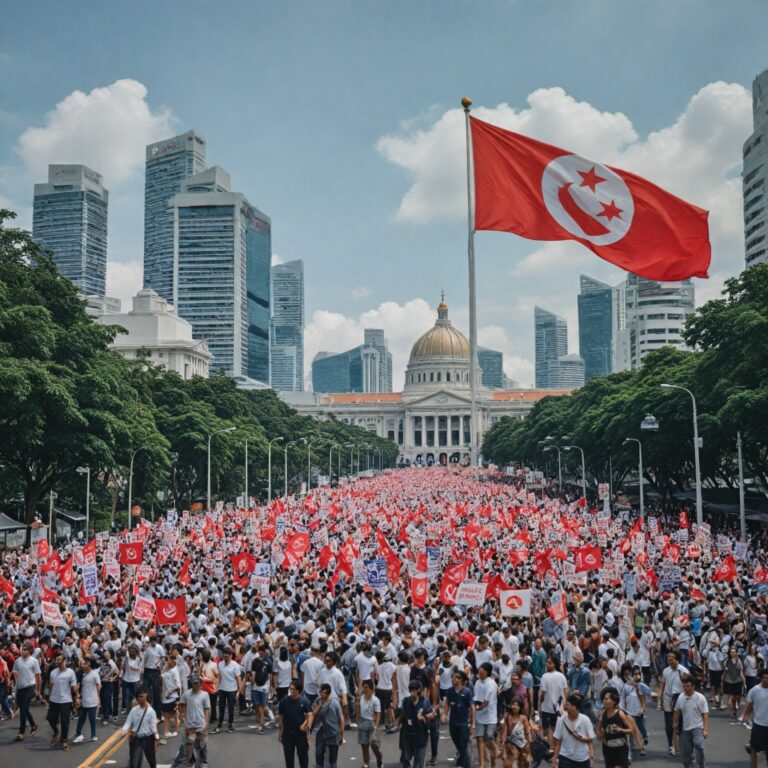
Labor experts and academics underscored the broader significance of the administration’s approach. Joseph A. McCartin of Georgetown University suggested that these actions could have lasting consequences for workers’ rights beyond the federal sector. Critics characterized the national security rationale cited by the administration as a convenient pretext to impose a political agenda aimed at silencing opposition within the federal workforce and undermining institutions that challenge executive power. Protesters rallied in support of affected workers, demonstrating at key federal locations including the Office of Personnel Management and the U.S. Capitol.
In response to the backlash, bipartisan legislation was introduced in the House of Representatives to restore collective bargaining rights to the affected federal employees, signaling congressional resistance to the administration’s initiative. The controversy surrounding the executive order highlights an ongoing power struggle over labor rights in the federal workforce and raises concerns about the future of union protections in both the public and private sectors.
Legal Challenges and Judicial Proceedings
The Trump administration’s executive order aimed at eliminating collective bargaining rights for numerous federal employees has faced significant legal challenges and judicial scrutiny. Following the issuance of the order, which sought to exclude employees in agencies such as the Environmental Protection Agency, the Department of Veterans Affairs, and the FDA from union negotiations under the pretext of national security and efficient government management, multiple lawsuits were filed challenging its legality.
A federal judge promptly issued a preliminary injunction blocking the implementation of the order, preventing federal agencies from enforcing its provisions against employees other than President Trump himself. This injunction temporarily halted the administration’s efforts, but the government appealed the decision, signaling an ongoing legal battle that could ultimately be decided by the U.S. Supreme Court. Legal experts and union representatives expect the cases to reach the highest court, given their broad implications for labor rights and executive authority.
Unions such as the American Federation of Government Employees (AFGE) and the National Treasury Employees Union (NTEU) have been vocally opposed to the order, describing it as a retaliatory attack on unionized federal workers and a threat to public services. AFGE President Everett Kelley condemned the move as undermining the rights of patriotic civil servants, many of whom are veterans, and pledged immediate legal action in response. Similarly, NTEU President Doreen Greenwald characterized the order as a “brazen attempt” to continue the administration’s “reckless assault” on federal agencies and promised vigorous court challenges.
Critics argue that federal employees already operate under strict collective bargaining constraints and that the administration’s move leaves them vulnerable to employer retaliation without due recourse. Furthermore, commentators suggest that the national security rationale offered by the administration serves as a convenient pretext to silence dissent and diminish the power of unions within the federal workforce. This strategy aligns with other aggressive measures by the administration to reshape federal employment and management practices, including efforts to limit union influence over agency policies.
Congressional responses have included bipartisan legislation proposed to restore collective bargaining rights for affected federal workers, signaling political opposition to the executive order beyond the courts. Legal scholars note that collective bargaining acts as a check on presidential authority by restricting unilateral managerial actions within the federal bureaucracy, further underscoring the contentious nature of the dispute.
Impact and Implications
The Trump administration’s initiative to curtail collective bargaining rights for numerous federal employees has far-reaching consequences that extend beyond government employment. Experts such as Joseph A. McCartin, director of Georgetown University’s Kalmanovitz Initiative for Labor and the Working Poor, warn that these actions could significantly undermine workers’ rights nationwide.
By law, federal unions are restricted from negotiating over pay, benefits, or job classifications and are limited to discussing working conditions. Additionally, federal employees are prohibited from striking. The administration’s recent measures seek to further diminish the role of federal unions by disregarding collective bargaining agreements during workforce reductions and office return mandates, and by canceling agreements signed late in the preceding administration’s tenure. The American Federation of Government Employees (AFGE) has criticized these actions, emphasizing that weakening collective bargaining harms public services by deteriorating federal employee conditions and undermines longstanding precedents of union representation.
Legally, federal agencies must negotiate changes affecting mandatory subjects such as wages and working conditions with unions before implementing them, except under specific circumstances like economic exigencies or union obstruction. Collective bargaining agreements serve as a crucial check on presidential authority by regulating personnel policies, performance reviews, and grievance procedures, thereby shaping the management of the federal bureaucracy. The Trump administration’s efforts to limit these agreements effectively weaken this institutional check, stripping federal workers of protections and recourse against employer retaliation and unfair labor practices.
The executive order impacts over one million federal workers, with the White House citing the Civil Service Reform Act of 1978 as providing authority to halt collective bargaining at agencies involved in national security missions. Supporters of the order argue that federal unions have been a financial and operational burden on government and taxpayers for decades and that reducing their influence is necessary. Conversely, legal challenges brought forth by unions such as AFGE reflect concerns that these actions are part of broader authoritarian efforts targeting labor organizations and other dissenting institutions, with cases expected to reach the Supreme Court.
Historical Context and Comparisons
The ability of federal employees to unionize and collectively bargain has evolved significantly since the early 1960s. Prior to this period, federal workers had limited rights to organize or negotiate workplace conditions. In
Future Outlook
The legal and political battles surrounding the administration’s initiative to halt union negotiations for numerous federal employees are expected to continue in the near future. Rushab Sanghvi, general counsel for the American Federation of Government Employees (AFGE), anticipates a decision on their lawsuit against the administration within the next month but predicts that the matter will ultimately be resolved by the Supreme Court, reflecting the broader constitutional and labor implications of the case. This expectation is underscored by recent Supreme Court rulings that have significantly influenced federal labor relations and agency authority, signaling a judicial environment keenly attentive to the balance between employer power and workers’ rights.
The administration’s use of national security as a rationale for terminating collective bargaining agreements is widely viewed by critics as a pretext for a broader effort to diminish union influence and suppress dissent within the federal workforce. The executive order affects eighteen departments and permits agencies to implement wide-ranging workforce reductions and policy changes without union negotiation, intensifying concerns over weakened labor protections and the erosion of established procedures. Given that federal unions are legally constrained in their bargaining scope and prohibited from striking, the administration’s moves are perceived as an aggressive strategy to further limit employee voice and retaliate against organized labor.
Looking ahead, the political environment suggests continued contestation over federal labor rights. The administration’s intent to drastically reduce the federal workforce and consolidate control over bureaucratic functions signals ongoing challenges for unionized federal employees and their representatives. Moreover, the likelihood of protracted litigation and the potential for Supreme Court intervention underscore the unresolved nature of these disputes and their significance for the future of labor relations in the federal government.
Union organizations and allied groups are expected to maintain pressure through legal, political, and public advocacy efforts. Mobilization campaigns and demonstrations have already been initiated to oppose what has been characterized as illegal union-busting tactics, with calls for sustained action to protect collective bargaining rights and federal employees’ working conditions. The unfolding developments will thus shape not only the immediate status of collective bargaining in the federal sector but also the broader dynamics of labor relations and administrative governance in the coming years.
The content is provided by Jordan Fields, The Daily Pulse