Summary
The court ruling invalidating former President Donald Trump’s tariff reversals marks a significant judicial check on executive authority in U.S. trade policy. In a decision by a three-judge panel of the U.S. Court of International Trade, several broad tariffs imposed under the International Emergency Economic Powers Act (IEEPA) were struck down as exceeding the president’s statutory and constitutional powers. The court held that IEEPA, a law designed to address unusual and extraordinary foreign threats during national emergencies, did not authorize the sweeping tariff actions taken by the Trump administration, reaffirming that the Constitution vests exclusive tariff-setting authority in Congress.
The ruling centers on constitutional doctrines that limit executive power, notably the nondelegation doctrine and the major questions doctrine. Plaintiffs argued—and the court agreed—that Congress had not provided a clear and intelligible principle authorizing the president to impose broad tariffs affecting numerous countries, thus violating the constitutional separation of powers. The decision highlights ongoing tensions between the executive branch’s use of emergency economic powers and Congress’s legislative prerogatives, raising important questions about the scope of presidential authority in trade matters.
The legal challenge was driven by a coalition of small businesses and state governments, who contended that the tariffs inflicted substantial economic harm without proper legal basis. The ruling not only nullified the tariffs immediately but also underscored the judiciary’s role in enforcing constitutional limits on unilateral executive actions in economic policy. The Trump administration rejected the court’s authority to curtail its trade measures, signaling continued political and legal disputes over tariff authority.
Beyond its constitutional implications, the ruling has broad economic and geopolitical consequences. The tariffs had significantly increased U.S. trade tensions with major partners like Canada, Mexico, and the European Union, causing market volatility and disrupting longstanding trade relationships. By limiting the president’s ability to impose tariffs unilaterally, the decision may reshape U.S. trade policy and encourage greater congressional involvement, with potential impacts on domestic industries, international relations, and future tariff litigation.
Background
Tariffs are taxes imposed by the federal government on imported goods and services, traditionally requiring Congressional approval for their implementation. Historically, tariffs have served various roles in U.S. trade policy, including revenue generation in the early republic, import restriction in the late 19th and early 20th centuries, and fostering reciprocal trade agreements from the mid-20th century onwards. However, President Donald Trump’s expansive tariff policies represented a significant departure from these norms, as he imposed broad tariffs on multiple countries, including China, Canada, Mexico, the European Union, and the United Kingdom, under the assertion of protecting American manufacturing and jobs.
To justify these sweeping tariffs without direct Congressional authorization, the Trump administration invoked the International Emergency Economic Powers Act (IEEPA) of 1977, declaring a national emergency based on large and persistent U.S. trade deficits and alleged unfair trade practices by other nations. This legal rationale allowed the administration to impose a baseline 10% tariff on imports from most countries, with higher reciprocal tariffs targeting specific trading partners. Additionally, some tariffs were linked to national security concerns, such as efforts to combat the flow of illegal drugs and immigrants into the United States.
The administration’s use of IEEPA for tariffs raised significant legal challenges. Critics argued that the statute was not intended to authorize broad economic tariffs and that such monumental policy decisions required clear Congressional authorization under the major questions doctrine, a Supreme Court principle emphasizing that Congress must clearly delegate significant regulatory powers. Moreover, trade laws generally mandate tariffs to be targeted by country or product, conflicting with the Trump administration’s goal of universal tariffs on a broad scale. Consequently, multiple lawsuits were filed contesting the legality of the tariffs, prompting judicial scrutiny of the president’s authority under IEEPA and related statutes.
A three-judge panel at the Court of International Trade ruled that IEEPA did not grant the president the authority to impose such sweeping tariffs and blocked several of the levies imposed in response to trade deficits and border security concerns. This ruling highlighted the ongoing tension between executive actions in trade policy and the statutory powers reserved for Congress, underscoring the complex legal and political dynamics underlying the Trump administration’s tariff measures.
Legal Challenge
Multiple legal challenges were brought against President Donald Trump’s tariff policies, focusing primarily on the authority under which the tariffs were imposed. Central to these challenges was the argument that the tariffs exceeded the powers granted by the International Emergency Economic Powers Act (IEEPA), a 1977 federal statute that authorizes the president to regulate international commerce only after declaring a national emergency stemming from unusual and extraordinary threats originating largely outside the United States. The Court of International Trade, which handles disputes involving international trade and customs laws, heard oral arguments in several such cases, including VOS Selections v. Trump, a lawsuit filed by a coalition of small businesses severely impacted by the tariffs.
Plaintiffs in these cases, ranging from libertarian legal groups such as the Liberty Justice Center to state governments including California, contended that the IEEPA did not grant the president the sweeping tariff authority exercised by the Trump administration. They invoked constitutional doctrines—most notably the nondelegation doctrine and the major questions doctrine—to argue that Congress had not clearly authorized such a broad delegation of tariff-setting power to the executive branch.
The nondelegation doctrine holds that Congress, vested exclusively with legislative powers under Article One, Section 1 of the U.S. Constitution, cannot delegate that power without providing an intelligible principle to guide the delegatee’s actions. Courts have historically been wary of executive overreach in tariff imposition, as seen in the 1892 Field v. Clark case, where the Supreme Court emphasized that Congress cannot delegate legislative power to the president but allowed limited executive authority where Congress had supplied clear guidance. Plaintiffs argued that the IEEPA lacked sufficient standards to constrain presidential discretion regarding tariffs, thus violating the nondelegation doctrine.
The major questions doctrine further requires that when Congress delegates authority over issues of vast economic and political significance, it must do so explicitly and clearly. Conservatives on the Supreme Court have increasingly relied on this doctrine to limit expansive federal agency actions. In this context, the plaintiffs maintained that tariff imposition—bearing profound economic consequences—demands clear congressional authorization, which the IEEPA did not provide.
In rulings by a three-judge panel of the Court of International Trade, the courts agreed with these arguments, holding that the IEEPA did not authorize the president to impose the broad tariffs in question, thus invalidating the tariffs on constitutional grounds. The panel emphasized that because the Constitution expressly allocates tariff-setting powers to Congress, the statute could not be interpreted to delegate unbounded tariff authority to the president. The Trump administration rejected the courts’ authority to overrule the tariff actions, with White House spokesperson Kush Desai stating that it is not the role of unelected judges to decide how to address what the administration described as a national emergency stemming from U.S. trade deficits.
These legal battles represent a significant constitutional confrontation over the limits of executive power in trade policy and the role of the judiciary in enforcing the separation of powers. If these issues reach the Supreme Court, as some legal experts have suggested is possible but uncertain, the justices may be called upon to clarify the boundaries of the nondelegation and major questions doctrines in the context of modern trade and emergency powers.
Court Ruling
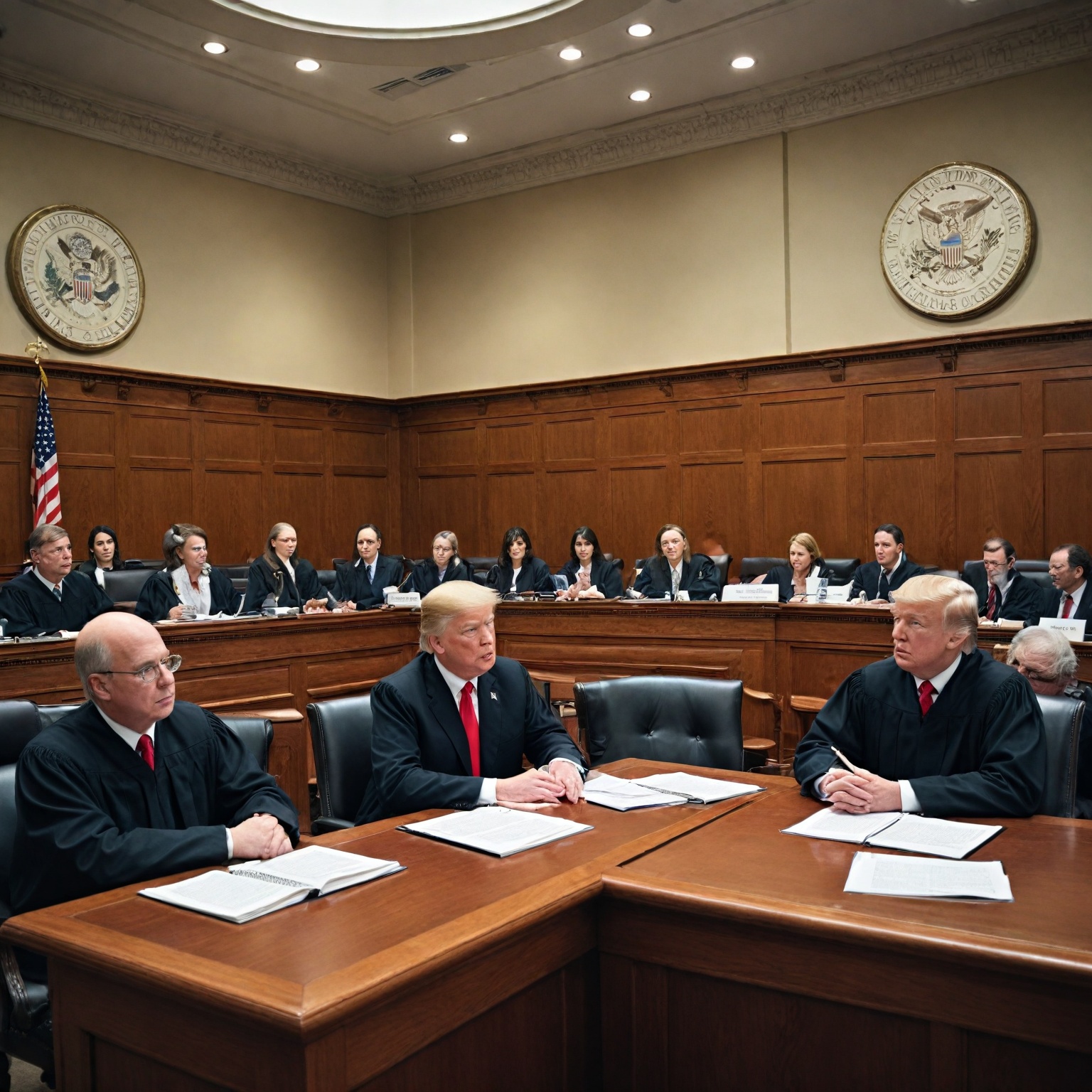
In a significant decision, a U.S. trade court ruled that former President Donald Trump exceeded his authority by imposing broad tariffs on imports from multiple trading partners under the International Emergency Economic Powers Act (IEEPA). The court invalidated all of Trump’s tariff orders issued since January that were based on the IEEPA, a statute intended to address “unusual and extraordinary” threats during a national emergency originating largely outside the United States. The ruling required Trump to issue new orders consistent with the court’s permanent injunction within ten days, effectively nullifying the tariffs immediately upon the ruling.
The court found that the emergency law invoked by the White House did not grant the president unilateral power to impose tariffs on nearly every country worldwide, reaffirming that the U.S. Constitution vests exclusive legislative powers in Congress. This judgment reflects principles rooted in the nondelegation doctrine, which prohibits Congress from transferring its legislative powers without providing an “intelligible principle” to guide executive action. Critics argued that the IEEPA lacked such guiding principles for imposing sweeping tariffs, thus violating constitutional limits on delegation.
Moreover, the case highlighted the relevance of the major questions doctrine, which demands clear congressional authorization when delegating powers of “vast economic and political significance.” Legal experts noted that applying this doctrine underscored the court’s skepticism toward expansive executive actions taken without explicit legislative backing, particularly in the realm of trade policy. The ruling follows a broader judicial trend in which courts have begun scrutinizing the scope of executive authority more rigorously, often invoking these doctrines to check perceived overreach.
The Liberty Justice Center, representing several small businesses potentially harmed by the tariffs, had filed a motion for a nationwide injunction, arguing that the tariffs were unauthorized under the IEEPA and could severely damage their operations. The court’s decision supported these claims, marking a critical check on the executive branch’s use of emergency powers in trade matters and signaling potential shifts in the balance of authority between Congress and the presidency.
Impact on Tariff Policy
The recent federal judicial ruling that invalidated many of the large-scale tariffs imposed during President Trump’s second term has had a significant impact on U.S. tariff policy. The decision specifically targeted tariffs issued under the International Emergency Economic Powers Act (IEEPA), which the administration had relied upon to justify sweeping tariff measures affecting numerous trading partners. The ruling underscored the constitutional principle that tariff-setting authority resides with Congress, not the executive branch, limiting the president’s ability to unilaterally impose or sustain broad tariffs without explicit legislative backing.
Following the court’s decision, the administration was ordered to halt collection of the affected tariffs within ten days, although it immediately filed plans to appeal. This development introduces uncertainty regarding the future of tariffs related to national security and economic emergencies, especially those targeting key exports such as whiskey and other goods from the U.S., some of which were scheduled for imminent tariff rate adjustments. The ruling’s emphasis on the limits of executive authority may constrain the president’s ability to deploy tariffs as a negotiating tool or retaliatory measure without congressional approval moving forward.
The broader economic implications are notable as well. Trump-era tariffs had elevated the effective U.S. tariff rate to its highest in over a century, resulting in retaliatory tariffs from major trading partners like Canada and Mexico, disrupting longstanding free trade relationships and causing market volatility. The court’s decision could prompt a reevaluation of these trade tensions, potentially easing tariff-related frictions and alleviating pressure on industries such as retail and manufacturing that had warned of price increases and supply shortages due to escalating tariffs.
Legal challenges brought by small businesses affected by the tariffs, including importers and distributors, have been strengthened by the ruling, highlighting the economic harm wrought by the measures and questioning their legal foundation under IEEPA. Experts have suggested that if the issue advances to the Supreme Court, doctrines such as the major questions doctrine and nondelegation doctrine could play pivotal roles in shaping the scope of executive power over tariffs. Meanwhile, the administration’s commitment to leveraging all available executive tools signals that tariff policy will remain a contested and evolving area of U.S. trade law.
Reactions
The court ruling that invalidated President Trump’s tariff reversals sparked significant responses across political, legal, and economic spheres. A federal judicial panel declared many of the large-scale tariffs issued under Trump’s administration as illegal, provoking sharp reactions from both the government and affected stakeholders.
From a legal perspective, the decision highlighted constitutional concerns regarding the delegation of tariff-setting powers. The court emphasized that, under the Constitution, tariff authority is expressly allocated to Congress, and the International Emergency Economic Powers Act (IEEPA) does not grant the President unbounded authority to impose tariffs. This view aligns with a growing body of Supreme Court jurisprudence emphasizing the “major questions doctrine,” which requires clear congressional authorization for executive actions of significant economic or political consequence. Legal scholars have noted that the ruling reflects a critical check on executive power, with some anticipating that any eventual Supreme Court consideration of the case may uphold the court’s strict interpretation of statutory authority.
The Trump administration, however, rejected the court’s authority to curtail the President’s tariff powers, with White House officials asserting that it is not for unelected judges to determine how to address national emergencies. The administration expressed its commitment to utilizing every executive power available to restore American economic strength, although it did not immediately clarify plans to appeal the ruling. President Trump had previously defended the tariffs as necessary for protecting American jobs and addressing unfair global trade practices, framing the tariffs as part of a broader “Made in America” economic and national security priority.
Internationally, the tariffs and subsequent legal battles intensified trade tensions, particularly with Canada, Mexico, and the European Union. Canada retaliated with 25% tariffs on $20 billion in U.S. goods and signaled plans to escalate these measures, while Mexico prepared its response shortly thereafter. European leaders, including Germany’s chancellor-in-waiting Friedrich Merz, vowed to defend their interests vigorously, leaving “all options on the table” in response to U.S. auto tariffs.
Economic analysts and industry stakeholders expressed concerns over market volatility and the adverse effects of the trade war on sectors such as retail and automotive manufacturing. The imposition and uncertainty surrounding the tariffs contributed to stock market declines and raised fears of broader economic harm. An International Monetary Fund study suggested that reversing the 2018–2019 tariffs could boost U.S. output by up to 4% over three years, underscoring the tariffs’ detrimental impact on the economy.
Small businesses adversely affected by the tariffs also played a vocal role in the legal challenge. Groups represented by the Liberty Justice Center argued that the tariffs risked devastating their companies, further reinforcing the legal case against the administration’s tariff authority under IEEPA.
Implications
The recent court ruling invalidating President Trump’s tariff reversal carries significant legal and economic implications. Legally, the decision raises critical questions regarding the application of the major questions doctrine and the nondelegation doctrine. These doctrines serve as judicial tools to ensure that Congress does not impermissibly delegate legislative powers to the executive branch without clear and specific authorization. The major questions doctrine requires Congress to speak clearly when delegating powers of vast economic and political significance, while the nondelegation doctrine demands an intelligible principle guiding the exercise of delegated authority. Notably, there is ongoing debate about whether these doctrines apply differently when power is delegated directly to the president versus agency officials. For instance, in Nebraska v. Su (2024), the Biden administration argued that the major questions doctrine does not apply to the president, though some judges contend that separation of powers concerns are equally relevant regardless of the delegatee.
Economically, the ruling could have a considerable impact on trade policy and the broader U.S. economy. The tariffs imposed during the Trump administration, which the court found partly unauthorized, have been estimated to reduce long-run GDP by approximately 0.2 percent, decrease capital stock by 0.1 percent, and reduce employment by over 140,000 full-time equivalent jobs. Households face an average tariff-related tax increase of nearly $1,200 in 2025, reflecting the broader economic burden of these trade measures. While proponents of the tariffs argue that they incentivize domestic production and protect American jobs, critics highlight the adverse effects on consumers and businesses that rely on imported goods, noting that tariffs function as taxes that often pass costs
The content is provided by Blake Sterling, The Daily Pulse